Guider
3D-Printed Terrain: The Cheapest Way to Fill a Table
Terrain is where a filament printer earns its keep: big forgiving shapes, tiny material costs, and a thriving STL scene. How to go from empty table to full battlefield without breaking the bank.
Skrevet av Miniheist-teamet · Publisert 08.08.2026
If there is one unambiguous bargain in tabletop 3D printing, it is terrain. Boxed scenery is expensive per square centimetre of table coverage, while a filament printer turns pocket-money plastic into ruins, forests of columns, and whole city blocks. Layer lines that would ruin a face simply vanish on a shattered wall under drybrushing. This is the project that justifies the machine.
Why FDM owns this niche
Terrain pieces are large, hollow-friendly, and structurally simple — exactly what filament printers do best. A single kilo of PLA yields a surprising amount of battlefield, and failures cost pennies rather than heartbreak. Resin printers can make exquisite scatter pieces, but for volume coverage the economics point one way.
Where the files come from
The STL ecosystem for terrain is enormous. Free repositories cover the basics — crates, barricades, ruined walls — while independent designers sell themed sets (gothic ruins, sci-fi colonies, fantasy villages) as one-off packs or monthly subscriptions that cost less than a single boxed kit. Many sets are "tile-based" so pieces combine into larger buildings. As always: buy from the original designers, avoid rips of official kits, and check the licence if you ever intend to sell prints.
Print settings, the short version
Terrain forgives almost everything, which makes it the perfect training ground. Bigger layer heights print dramatically faster and read as texture rather than error at tabletop distance. Two or three perimeter walls with modest infill give pieces that survive being dropped in a bag. The only real rule: match your pieces' footprint to the games you play, so cover actually blocks the lines of sight your rules care about.
Finishing: where cheap becomes gorgeous
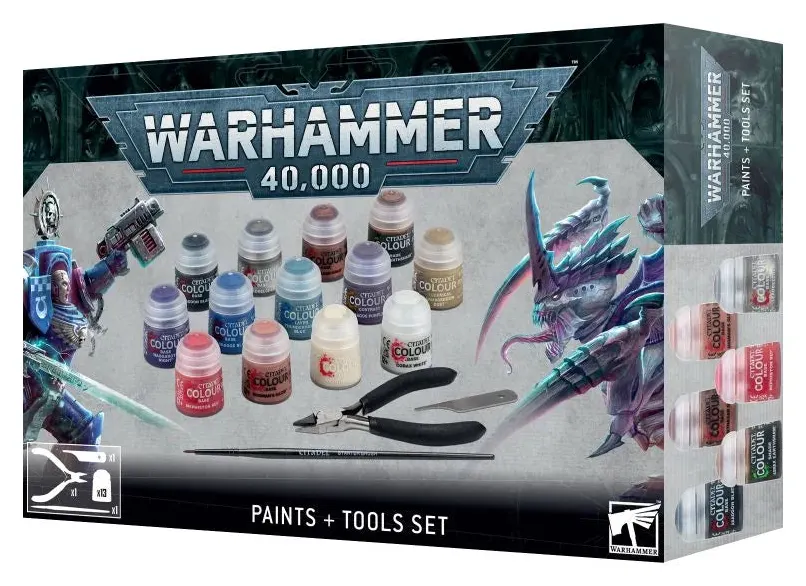
Primer, heavy drybrushing, and a couple of contrast washes turn grey plastic into stone, rust, and concrete in an evening — terrain painting is fast, forgiving, and genuinely fun. Rattle-can primers and big cheap brushes do most of the work; save the fine brushes for your miniatures. Paint ranges are one of the places where retailer prices differ most, so compare before stocking up:
What still deserves shelf money
Official terrain kits still make sense where their design is the point — signature centrepieces, tournament-standard layouts, or scenery matched to a boxed game's aesthetic. For everything else on the table, your printer has it covered, and the money saved buys the boxes that actually matter to you.