Guider
The Paints and Tools You Actually Need to Start Miniature Painting
A minimal, no-regrets starter kit for miniature painting: the few tools and paints that matter, and the expensive extras you can safely postpone.
Skriven av Miniheist-teamet · Publicerad 11.07.2026
Walk into any hobby store and ask what you need to start painting miniatures, and you risk leaving with a bag that costs more than your first box of models. The truth is more comfortable: a genuinely good starter setup is small, and almost everything else can wait until you know your own habits. Here's the honest list — and the things you can safely postpone.
The tools you can't skip
- A pair of hobby clippers. Miniatures come attached to plastic frames, and clippers are how you get them off without tearing the plastic. Any dedicated hobby clipper is fine to start with — flush-cutting side matters more than brand.
- A hobby knife. For cleaning up the small nubs left where the model met the frame. A basic knife with replaceable blades does the job for years.
- Plastic glue. For plastic kits, polystyrene cement is the right choice: it welds the parts together rather than just sticking them. Keep a small tube of superglue around too — you'll want it for any resin or metal parts, and for bases.
- A cutting mat or an old magazine. Your table will thank you.
That's the whole essential toolkit. A mould-line scraper, files, and pin vises are all nice — later.
Primer: the one step you shouldn't skip
Paint doesn't stick well to bare plastic. A primer — usually a spray can — gives the model a surface paint can grip, and it's the difference between a finish that survives handling and one that rubs off at the first game. Black primer is the forgiving beginner's choice; white or grey makes colours brighter but shows mistakes more. One can lasts a surprising number of models, so this is not a place where you need to stock up.
Paints: buy for one scheme, not for a rack
The classic beginner mistake is buying paints by the dozen "to have options". You don't need options; you need the five to ten colours that your first unit's colour scheme actually uses: a base colour for the main armour or cloth, one or two secondary colours, a metallic, and something for the base. Add a couple of washes — thin, pigmented liquids that flow into recesses and create instant shading — and you have everything required to make a first unit look genuinely good. Washes are the closest thing miniature painting has to a cheat code, and they're typically among the cheapest bottles on the shelf.
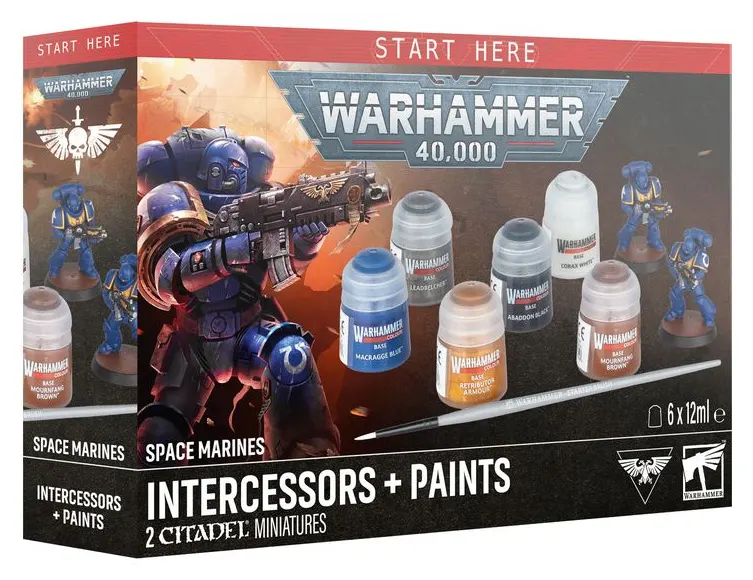
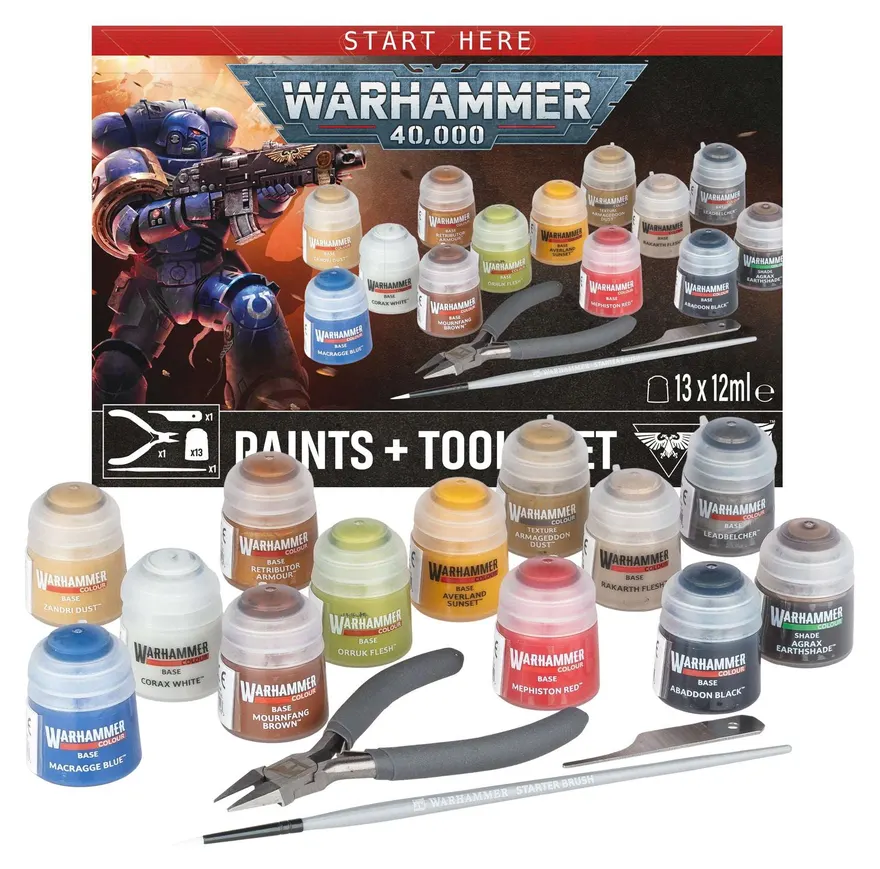
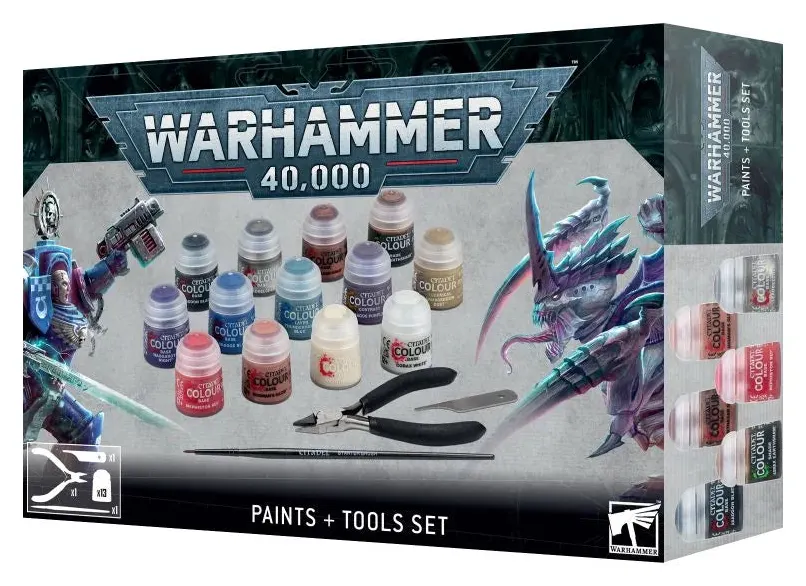
Boxed paint sets can be decent value when the colours match what you actually plan to paint — compare the set's price against buying the same pots individually before assuming the bundle is a bargain. The big mega-bundles with dozens of pots are rarely the right first buy: much of the rack will sit unopened.
Brushes: two or three, not twenty
You can paint an entire army with three brushes: a medium round for most work, a small round for details, and a cheap larger brush for washes, drybrushing and other jobs that ruin bristles. Mid-priced synthetic brushes are perfectly good to learn with; expensive natural-hair brushes reward technique you don't have yet — and punish the beginner habit of letting paint dry in the bristles. Upgrade when you notice the brush, not before. Do clean your brushes properly after every session — lukewarm water and a little mild soap is all it takes — and even cheap ones will last surprisingly long.
Things that can wait
- An airbrush. Wonderful, expensive, and entirely optional. Learn with a brush first.
- A wet palette. Genuinely useful, but a plate and a drop of water get you started — and a homemade one costs almost nothing.
- Specialist paints and effects. Texture pastes, glazes, contrast-style paints: all fun, none essential on day one.
- A painting handle and hobby lamp. Comfortable upgrades once you know you'll stick with the hobby.
Spending smart from the start
Hobby supplies are stocked by the same independent retailers that discount the boxed games, and prices differ more than you'd expect for identical products. Before buying a paint set or tool kit, look it up and compare what the retailers we track are charging — the product page's price history chart will also tell you whether a "sale" price is actually below normal. The habit takes seconds and, applied across a whole hobby's worth of purchases, quietly pays for a box or two of models every year.